What happens when Smalltooth Sawfish encounters a commercial shrimp trawl? And can underwater cameras help researchers understand how marine animals interact with fishing gear?
These questions are at the centre of a fisheries monitoring project in Florida. LGL Ecological Research Associates is leading the work with the Sustainable Fisheries Partnership (SFP) and the local pink shrimp fishing industry.
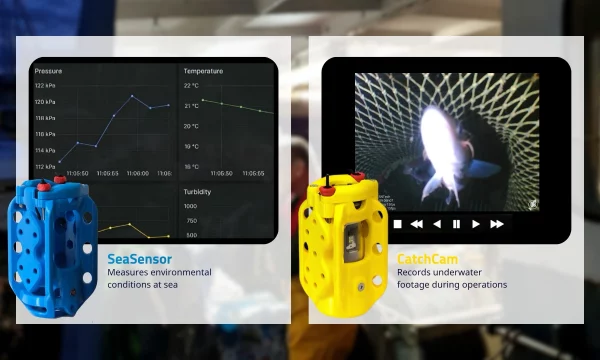
As part of the wider research, CatchCam underwater cameras have been trialled on commercial shrimping operations, giving researchers another way to observe activity from within the fishing gear.
Why monitor sawfish interactions with shrimp trawls?
The Smalltooth Sawfish (Pristis pectinata) is classified as Endangered under the US Endangered Species Act. Although it resembles a shark, it is actually a type of ray. Its most distinctive feature is its long, toothed snout, known as a rostrum.
This feature makes sawfish particularly vulnerable to entanglement in fishing nets, including those used in shrimp trawling.
Research examining commercial fishery bycatch risk in Florida has identified shrimp trawling as a potential concern for the species. However, there is still limited information about how frequently these interactions occur.
Looking inside the shrimp trawl
Bycatch Reduction Devices (BRDs) and Turtle Excluder Devices (TEDs) help unwanted marine animals escape fishing gear, while allowing the target catch to enter the codend.
But how do these devices perform underwater? Which species interact with them, and what happens when an animal approaches an exclusion grid?
Catch information and observations from the vessel cannot always answer these questions. Underwater cameras offer another perspective. They record activity directly from the fishing gear during commercial operations.
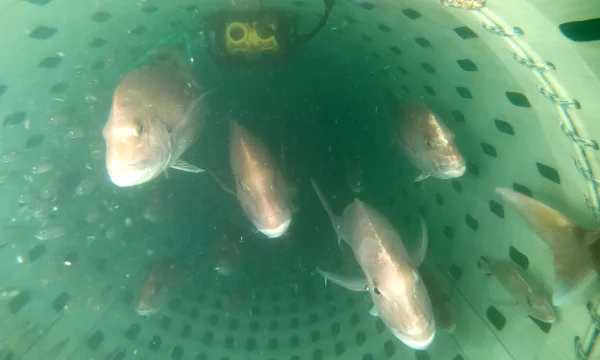
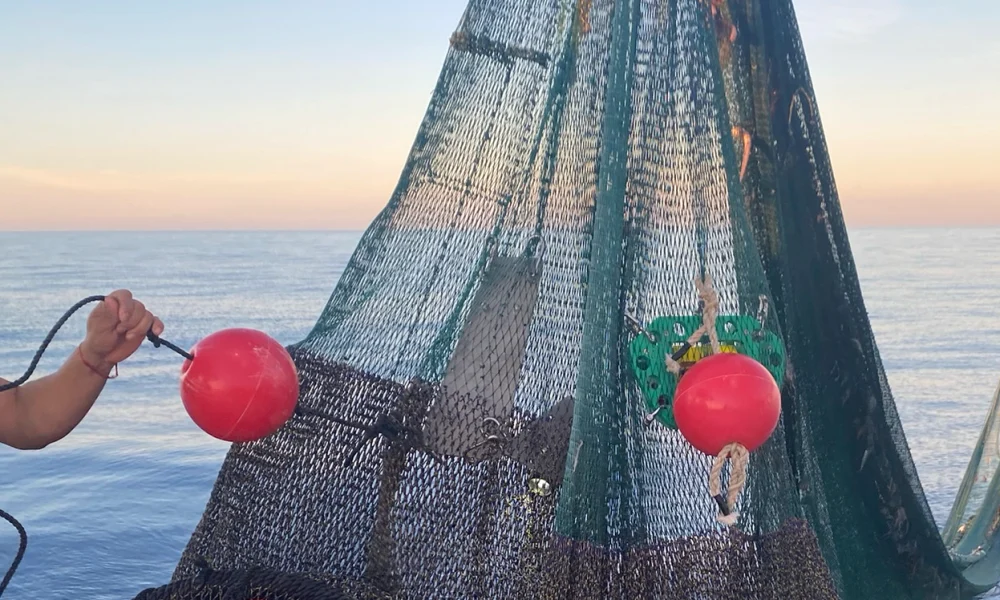
For this trial, researchers attached a CatchCam camera to the shrimp trawl and positioned it towards an exclusion grid. This allowed them to collect footage from within the gear.
CatchCam footage recorded inside a commercial shrimp trawl, showing the view towards an exclusion grid during fisheries monitoring.
Monitoring during commercial fishing operations
As outlined in the Bycatch Solutions Hub page, the wider 2-year research project combines electronic monitoring systems with underwater cameras fitted to fishing gear. So far, the project has recruited eight commercial vessels and installed vessel-mounted systems on seven of them.
CatchCam was deployed in one of these vessels:
“CatchCam just returned from a 49-day shrimping trip where the captain deployed the camera independently, after training from our scientists.”
Lewis Naisbett-Jones, PhD and Senior Fisheries Biologist at LGL
The camera recorded at one frame per second (1 FPS), providing approximately 40–50 days of onboard storage.
View from the trawl net of a shrimp trawl, showing how underwater cameras can support fisheries monitoring and research into fishing gear. Video recorded by the CatchCam camera system.
Supporting longer monitoring deployments
Long deployments bring practical challenges. Researchers need to manage recording time and battery use, particularly when cameras remain on fishing gear for several weeks.
CatchCam’s scheduling function helps manage this. Users can programme repeated recording periods, switching the camera on and off according to their monitoring plan.
As CatchCam CoFounder Tom Rossiter explains:
"Here we are deploying CatchCam for long periods, so scheduling it on and off becomes critical."
Tom Rossiter, CoFounder of CatchCam Technologies
For a practical demonstration, watch our CatchCam Schedule Mode tutorial, to see how to programme repeated recording periods.
Bringing fisheries research and commercial fishing together
The project brings researchers, seafood industry partners and commercial fishermen together to improve understanding of bycatch in the Florida pink shrimp fishery.
By combining vessel-mounted monitoring with underwater video, the project is exploring different ways to document fishing activity and investigate interactions between marine species and fishing gear.
The findings will help build a clearer picture of sawfish interactions with the fishery and inform future work on bycatch monitoring and mitigation.
For more updates on this project, access the Bycatch Solutions page here.
FAQs
Their long, toothed snout can become entangled in fishing nets, potentially causing serious injury or death. Shrimp trawling has been identified as a significant bycatch risk for the species in Florida.
A TED is a metal grid fitted inside a trawl. It directs larger animals towards an escape opening while allowing shrimp and smaller organisms to pass into the codend.
Whether you’re a commercial fisher, gear designer or fisheries scientist, we can help you gain new insights from your gear.