
Fishing vessels spend days and weeks at sea. They travel through areas that can be difficult and expensive for researchers to monitor continuously.
So what if vessels already at sea could also help collect that data?
This is the thinking behind the ongoing collaboration between CatchCam Technologies and Yatina.net. The work combines underwater and above-water cameras, AI and vessel data to build a clearer picture of what happens around fishing vessels.
The approach is being tested in Scotland, onboard the Eilidh Anne.
The Eilidh Anne is a Scottish trawler operating on the west coast of Scotland.
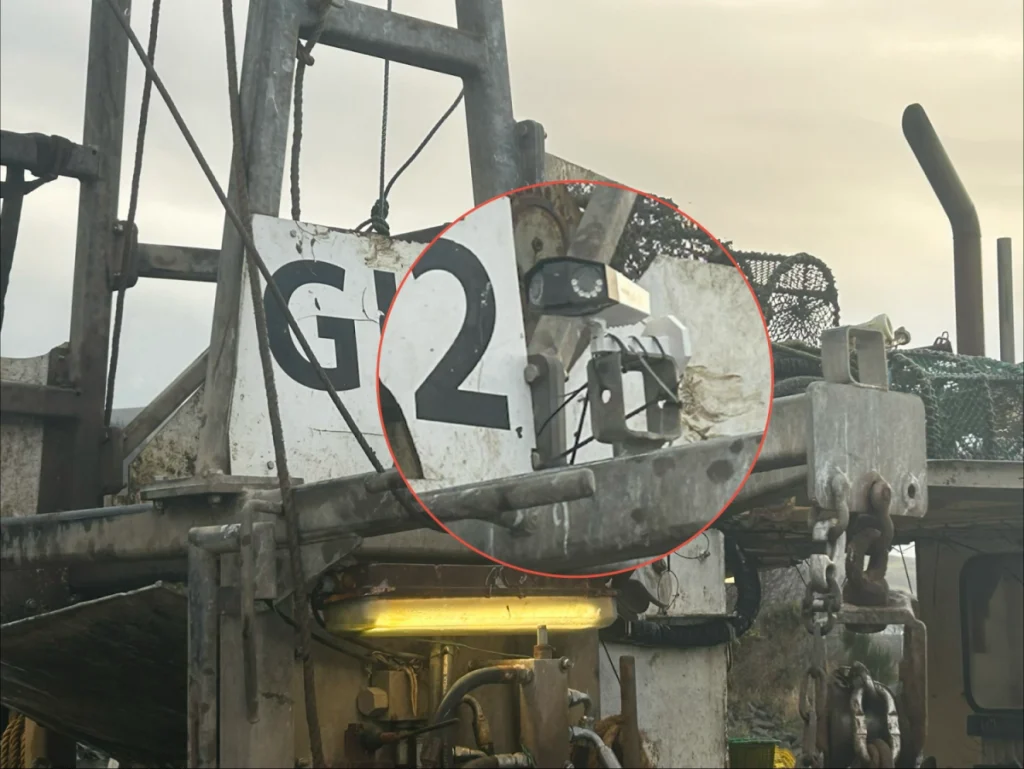
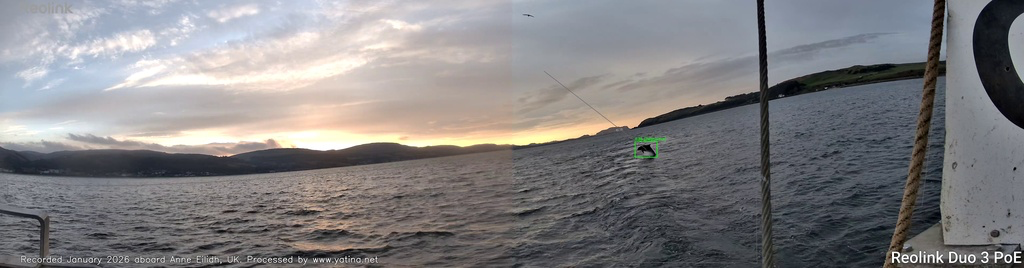
Since January 2026, it has been carrying a CatchCam – Yatina wildlife monitoring camera mounted on the rear gantry, looking back from the vessel.
The camera captures a wide 180-degree view, continuously recording the marine wildlife around the vessel, including seabirds, dolphins, seals and other wildlife.
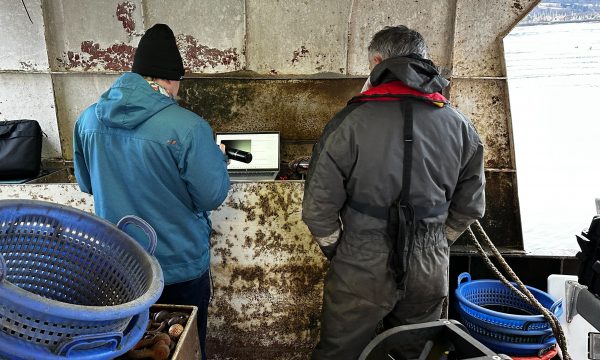
The setup is straightforward. Footage is recorded to a hard drive onboard. At the end of each week, the crew removes the drive and connects it to a Yatina box with a fast internet connection. The system then transfers the footage to Yatina’s servers for processing and analysis.
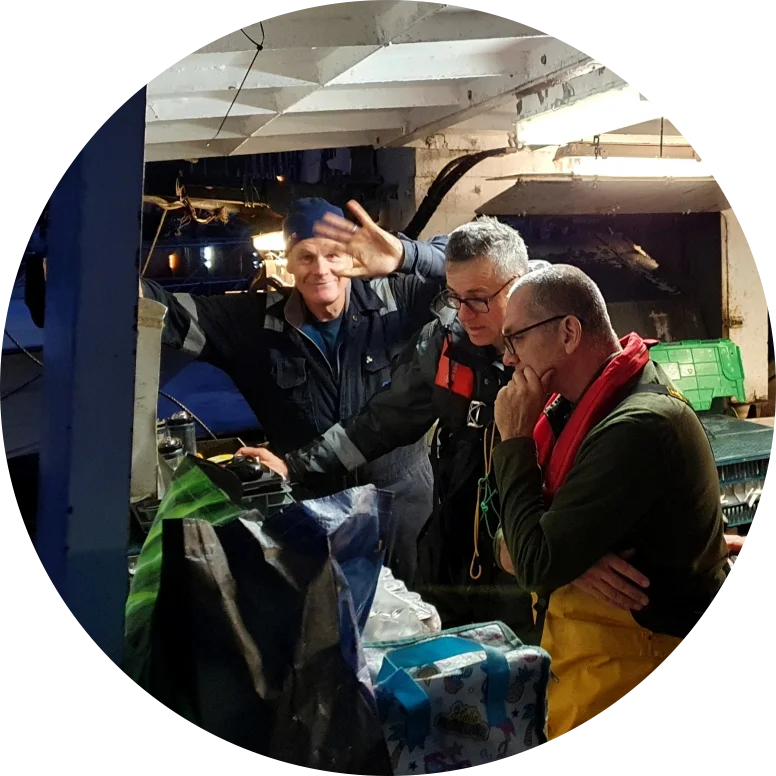
For skipper Ian Wightman, keeping the system running onboard has been relatively simple:
“The camera and the yatina box were both simple to install, very much like an outdoor security camera.”
The weekly data transfer also requires little input from the crew. They connect the drive, allow the footage to upload, and return it to the vessel for the next trip.
The result is a growing record of the wildlife observed around a working fishing vessel.
Collecting the footage is only the first step.
A camera can generate hours of video, but manually watching all of it to identify and count wildlife would quickly become impractical. This is where Yatina’s video-analysis expertise can help.
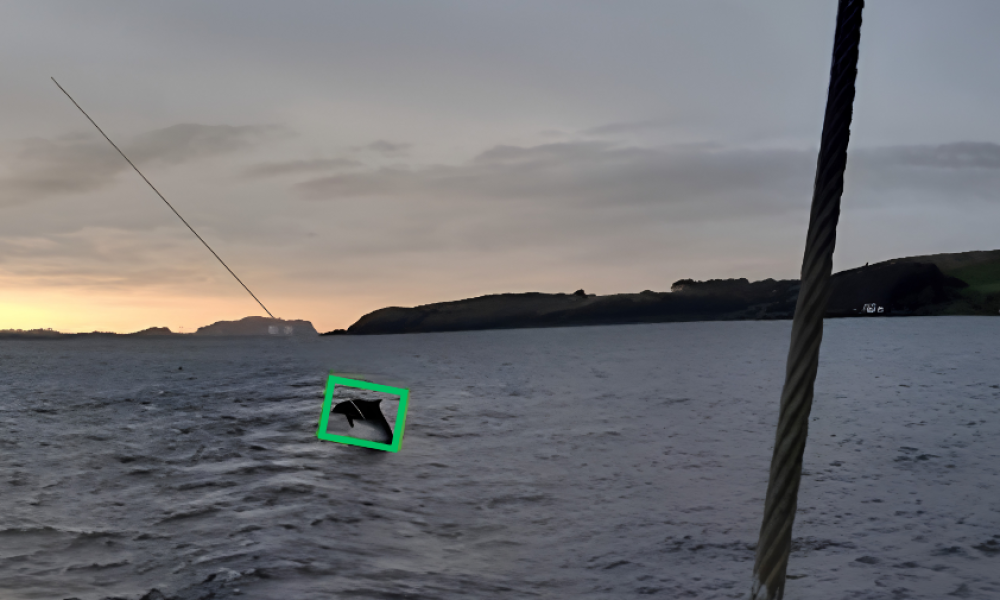
Yatina has been developing models and other video-analysis methods for specific detection tasks. For example, its dolphin detection work combines AI object detection with movement analysis to identify dolphins between waves.
The same principle can be applied to other wildlife.
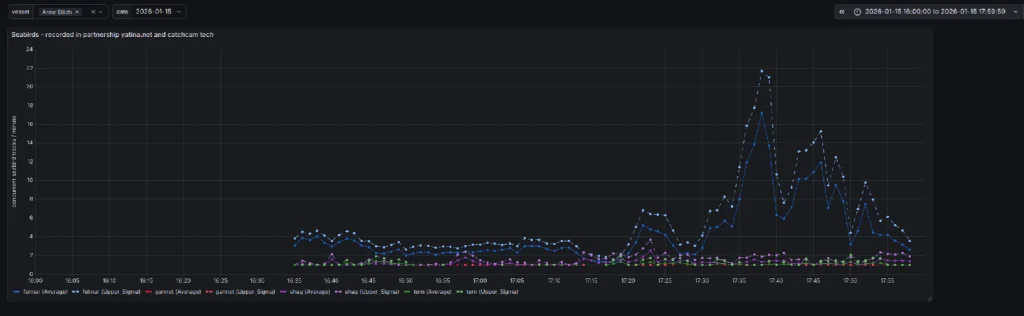
A seabird model can detect and count birds in footage. While Yatina has started to test this, further development and training is needed to improve its accuracy for specific species and conditions.
The aim is to turn large volumes of video into structured observations: what was detected, where, when and how often.
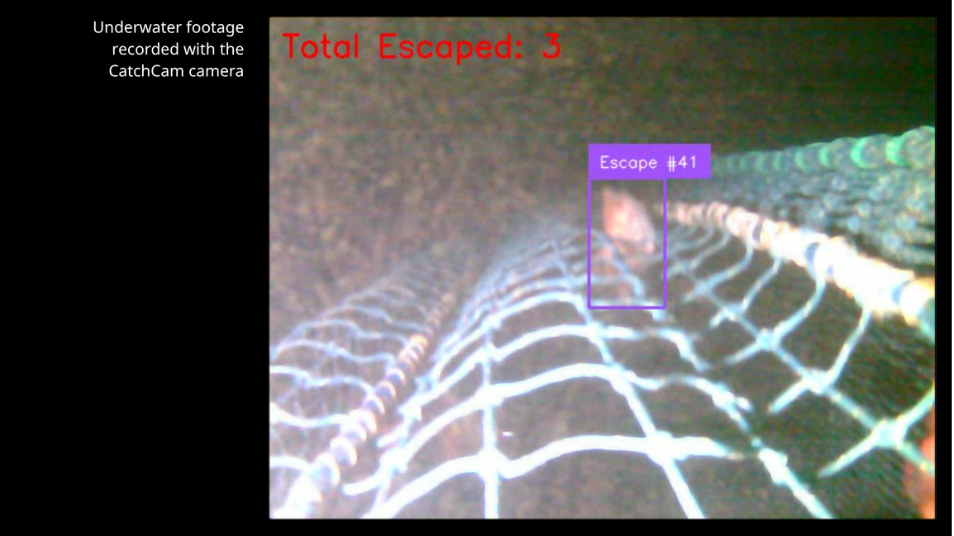
CatchCam and Yatina have also tested this approach with underwater footage.
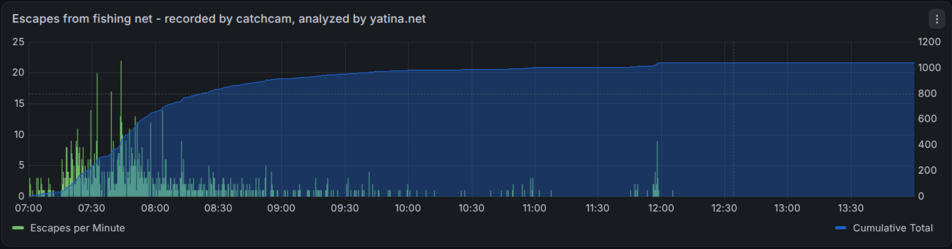
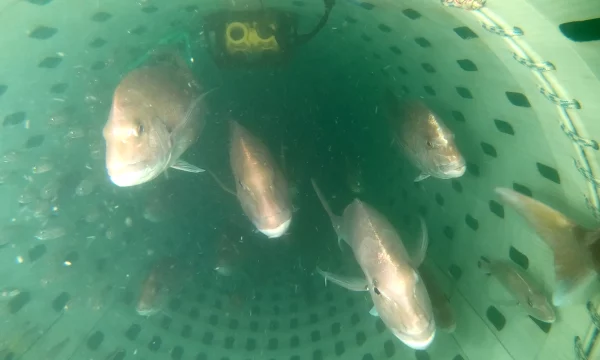
In one project, a CatchCam Deep camera mounted on a fishing net was used to monitor juvenile fish escaping through the mesh. Yatina.net analysed selected periods to count escaping juveniles.
The resulting data shows how escape events varied over time.
The principle is straightforward: use cameras to capture what is happening, then use video analysis to turn footage into data that can answer specific questions.
For Ian, the motivation for getting involved was straightforward: better evidence.
“I saw it as a good opportunity to collect our own data on seabirds and wildlife. As a skipper, I think it’s important to have our own data so we can better understand what’s happening around the vessel and have evidence based on what we actually see.”
Ian Wightman, skipper of the Eilidh Anne.
There are ongoing discussions about the impacts of fishing on marine wildlife. Yet we have relatively little continuous observation of what happens around working fishing vessels.
Rather than relying on assumptions or occasional observations, the Eilidh Anne provides an opportunity to collect consistent data from the fishing grounds.
The project is not about asking the crew to become wildlife researchers. The system runs in the background while the vessel carries out its normal activities.
Fishing vessels already collect data in many ways. This includes catch information, vessel position and environmental measurements. Adding wildlife observations creates another layer of information without requiring a dedicated research vessel to spend time at sea.
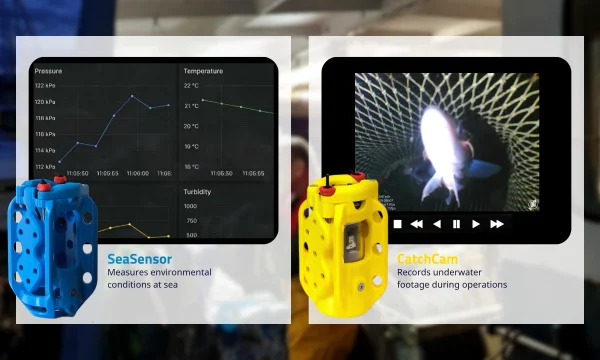
The Clyde Fishermen’s Association (CFA) has also been supportive of this approach to data collection. This sits alongside other efforts to collect information from fishing vessels, including environmental data collection from SeaSensor.
The value of this information doesn’t necessarily stop with research and conservation.
Wildlife can provide an indication of what is happening in the marine environment. Birds, cetaceans and other animals may be associated with areas of particular productivity or the presence of prey.
In the longer term, researchers could compare wildlife observations with vessel location, fishing activity and environmental conditions.
For example, could changes in wildlife observations indicate particular feeding conditions? Could researchers compare wildlife presence with catch rates or environmental measurements?
These are questions that future work could help investigate.
For now, the Eilidh Anne system is primarily creating the dataset and exploring what information can be extracted from the footage. Further work is needed to understand what patterns can reliably be identified and how that information could be made useful.
The Eilidh Anne is one example of a much broader idea: fishing vessels can also act as observation platforms.
They already operate in coastal waters, travelling regularly through fishing grounds and spending significant amounts of time at sea. With relatively simple monitoring equipment, these journeys can generate useful scientific observations.
There is still work to do before that vision becomes fully automated. Wildlife models need to be trained and refined, large volumes of video need to be processed efficiently, and the different datasets need to be brought together in a meaningful way.
But the principle is already being tested: put monitoring technology on working fishing vessels, collect the data as part of normal operations, and use video analysis to help turn that footage into evidence.
For researchers, this offers another way to observe marine wildlife. For fisheries, it provides an opportunity to build their own evidence about what happens at sea. And for fishermen, they could combine wildlife observations with environmental and fishing data to better understand the conditions in which they operate.
The collaboration is also expanding beyond Scotland.
Yatina.net is now a new CatchCam partner and supplier in Chile. This creates an opportunity to bring underwater in-net-monitoring technology to another major fishing region and explore how the approach can be adapted to different fisheries and operating environments.
If interested in Yatina’s work, reach out to Thomas Schweeger here for consultancy services and https://catchcam.cl for sales and support in Chile.
Whether you’re a commercial fisher, gear designer or fisheries scientist, we can help you gain new insights from your gear.
© 2026 CatchCam Technologies Ltd | Company Number 15904647 | Registered in England & Wales | Privacy & Cookie Policy