Skip to content
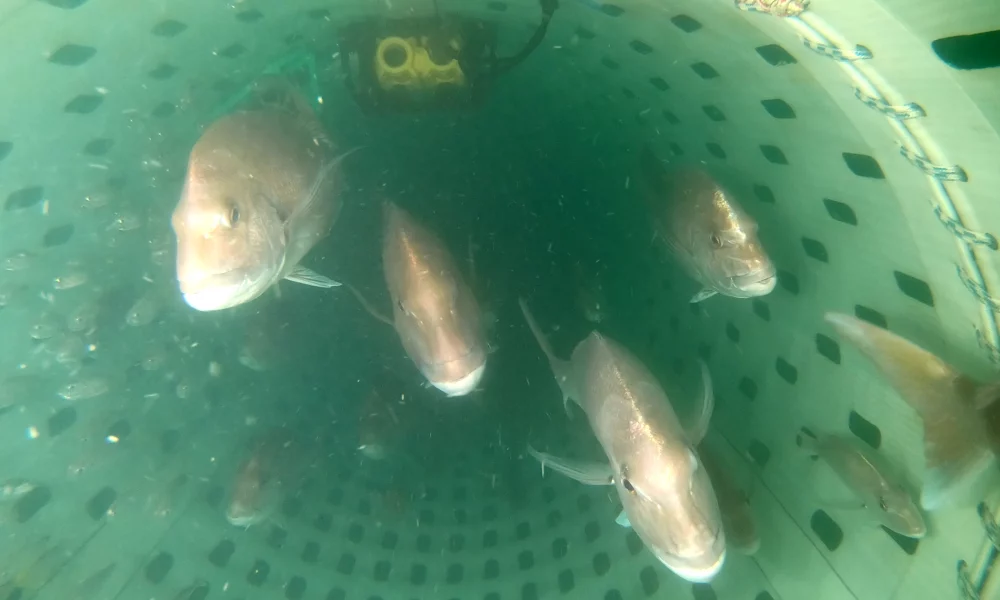
Commercial sea trials in Scotland and New Zealand demonstrate how acoustic underwater monitoring and remote codend release could change the way fishermen manage unwanted catch.
What if skippers could see inside the net?
As the saying goes, “it’s called fishing, not catching.” The uncertainty is part of what makes commercial fishing both rewarding and challenging.
Every tow requires skippers to make decisions: when to haul, where to fish, and how to respond to changing conditions. Yet one of the most important decisions – whether the catch should be brought aboard – has traditionally been made with the least information.
The truth is that by the time the codend reaches the surface, the opportunity to do anything about unwanted catch has often already passed.
So, what if skippers could see what was happening inside the codend, and act on it, while it was still fishing?
That’s what CatchCam, FloMo, and Plant & Food Research set out to test during commercial fishing trials in Scotland and New Zealand.
In the video, CoFounder of CatchCam Technologies, Tom Rossiter, shows how underwater catch monitoring works, why the codend release system can help fishereies, and walks us through the commercial trials in New Zealand.
Why catch decisions often come too late
Once a haul comes up with something that shouldn’t be there, every option comes at a cost.
Discarded catch survives with significant stress at best, or doesn’t survive at all at worst. Interactions with protected species can have serious regulatory and operational consequences. And even catch that is kept can lose value if quality deteriorates over a long tow.
As Tom Rossiter, Co-founder and CEO of CatchCam Technologies, explains:
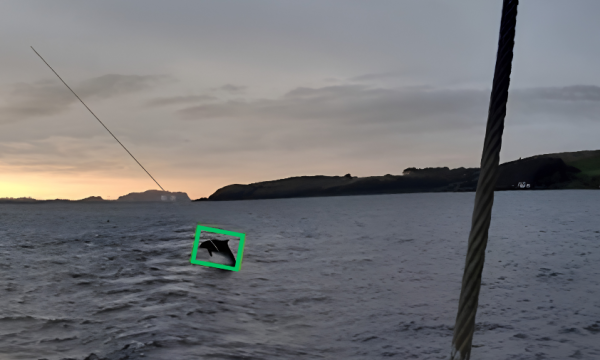
"You lose that whole haul, but it gets you out of trouble. This is a question of choke species and interactions with cetaceans. It's not a question of a modest penalty. If you catch a dolphin, you're out of fishing for half a year or longer. Plus there's the reputation of the whole industry to consider, so there's a lot at stake in getting it right."
Tom Rossiter, CoFounder of CatchCam Technologies
While Tom is referring to fisheries in New Zealand, the challenge is shared across commercial fisheries worldwide.
In many mixed fisheries, a choke species is one whose quota is exhausted before others. Once that limit is reached, vessels may be forced to stop fishing altogether, even if quota remains for their target species.
So, whether the objective is reducing bycatch, avoiding choke species, improving catch welfare or maintaining fish quality, the goal is the same:
Give skippers the information they need while they still have time to act.
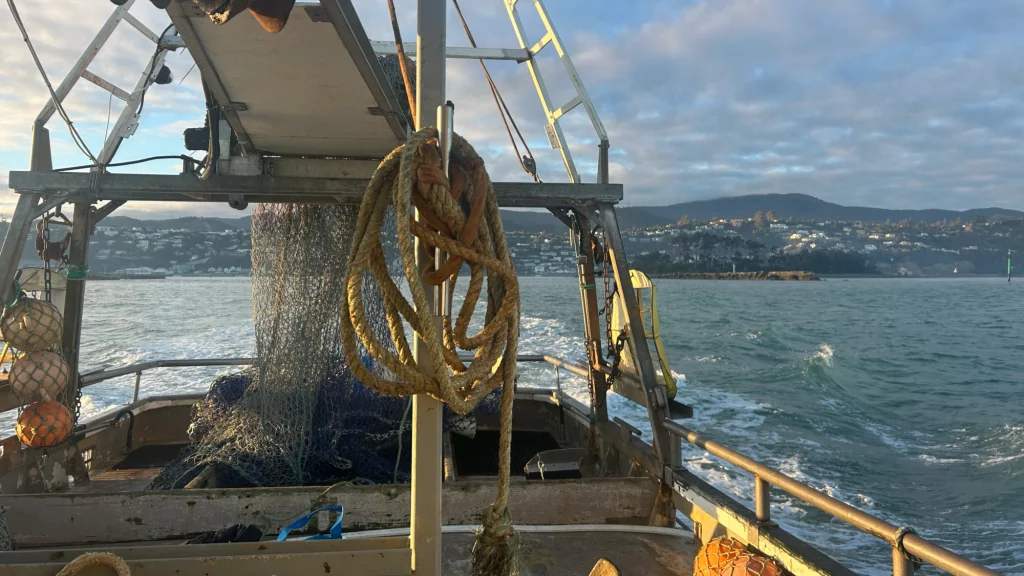
How does underwater catch monitoring improve catch decisions?
Traditionally, the codend remains invisible throughout the tow. Sensors can tell a crew how full the gear is, but not what’s actually inside it. That only becomes clear once the net is on deck.
Underwater catch monitoring changes this timeline.
A camera fixed inside the codend doesn’t change what enters the net, but it changes when the skipper receives that information, creating an opportunity to make informed decisions while the gear is still fishing.
It’s a small shift in timing, but one that could have significant implications for selective fishing, catch welfare and precision fishing.
CatchCam records FloMo system in a Nephrops mixed fishery in April 2026. Showing visibility while fishing and opening through the hauling process with some fish escaping.
How does the 'Release at Depth' system work?
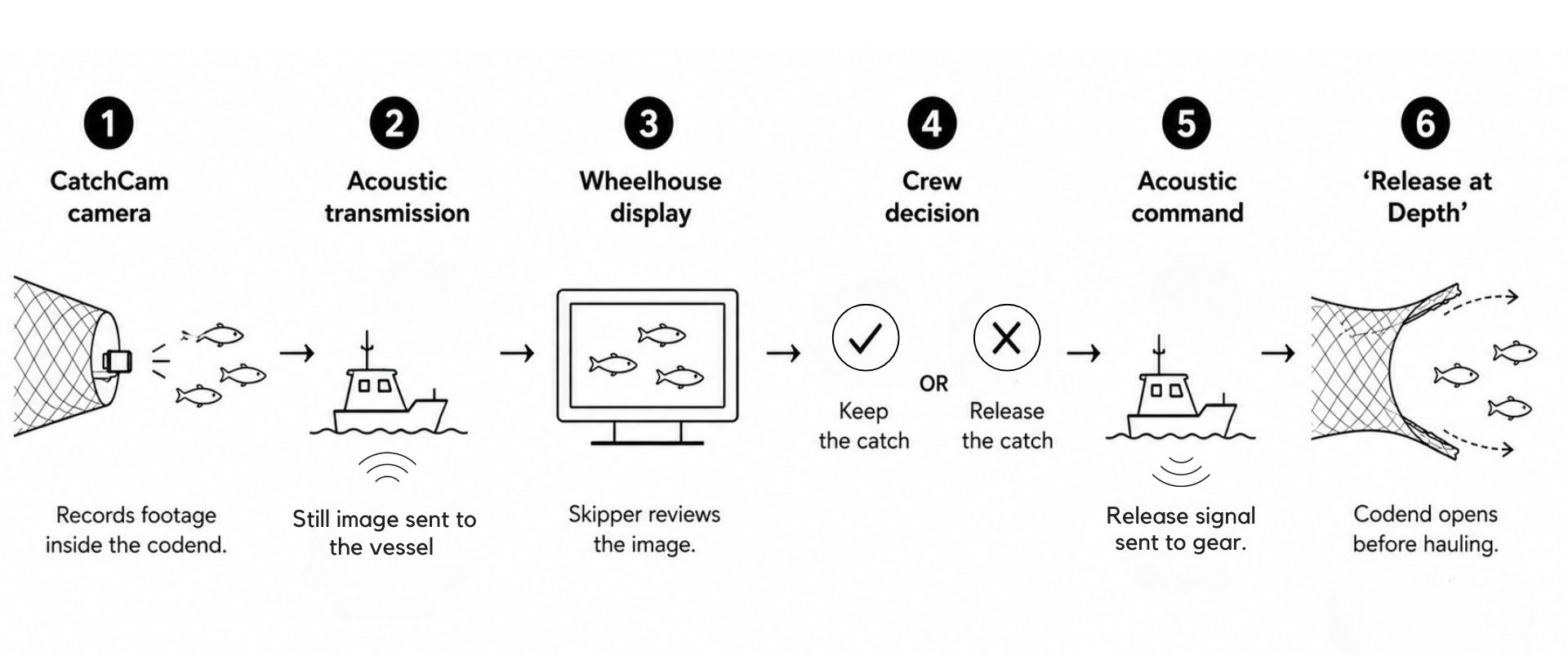
The system combines three technologies that work together to give skippers information while the gear is still fishing and, if required, the ability to release the catch before hauling begins.
- FloMo Net
FloMo has reimagined the traditional codend.
Its design improves water flow through the gear and into the codend, letting fish swim more naturally and helping preserve catch quality and welfare throughout the tow.
- CatchCam Camera
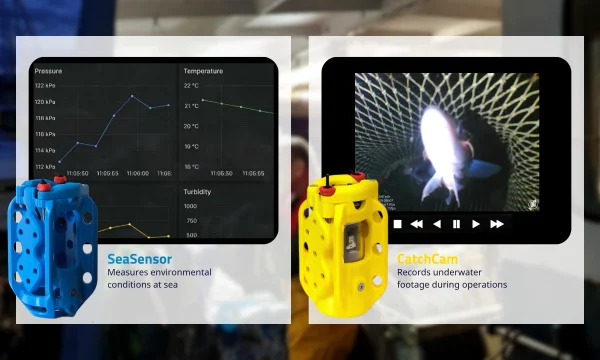
CatchCam provides the eyes inside the codend.
Every minute, the system converts a still image into an acoustic signal that can travel through the water.
A second transducer, towed alongside the vessel, then receives the acoustic signal and reconstructs the image on the wheelhouse display.
This is the layer that turns the codend from a black box into something a skipper can actually monitor mid-tow..
- ‘Release at Depth’ Codend
Release at Depth connects the information with an action.
If the skipper decides not to bring the catch aboard, an acoustic command is sent from the vessel back to the fishing gear.
This triggers the ‘Release at Depth’ mechanism (also known as actuator) and allows the codend to open, releasing the catch back into the water.
All three work as one system inside the codend. And together, these technologies move catch decisions from the deck to underwater.
From prototype to working at sea
For a fleet owner, the appeal isn’t the technology itself, it’s what a single avoided choke-species shutdown is worth. One dolphin interaction can mean six months or more out of the water. Set against that, the cost of avoiding it is a rounding error.
The system was also built to disappear into the existing workflow, not add to it. There’s no change to how the tow itself is set. The camera sits inside a FloMo codend, and the decision to release happens from the same wheelhouse display the crew is already watching.
Reviewing a still image once a minute and sending a release command is a fast decision, which matters on a working deck where crew time is the scarcest resource on board.
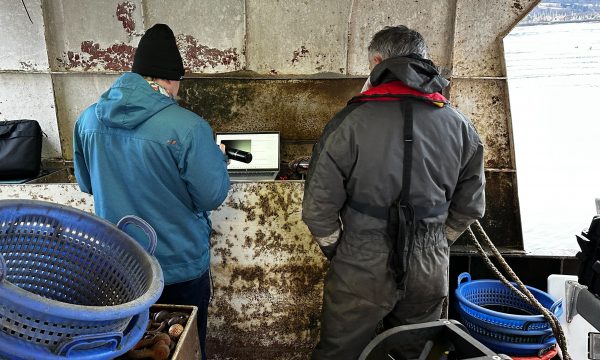
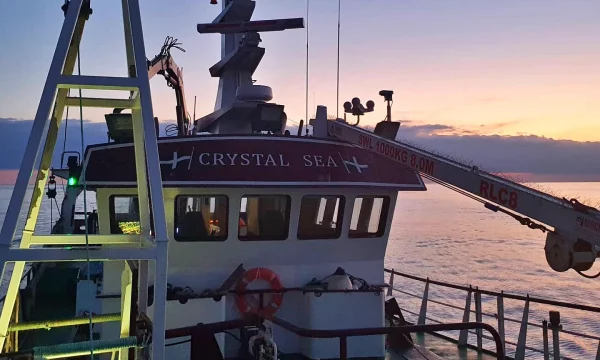
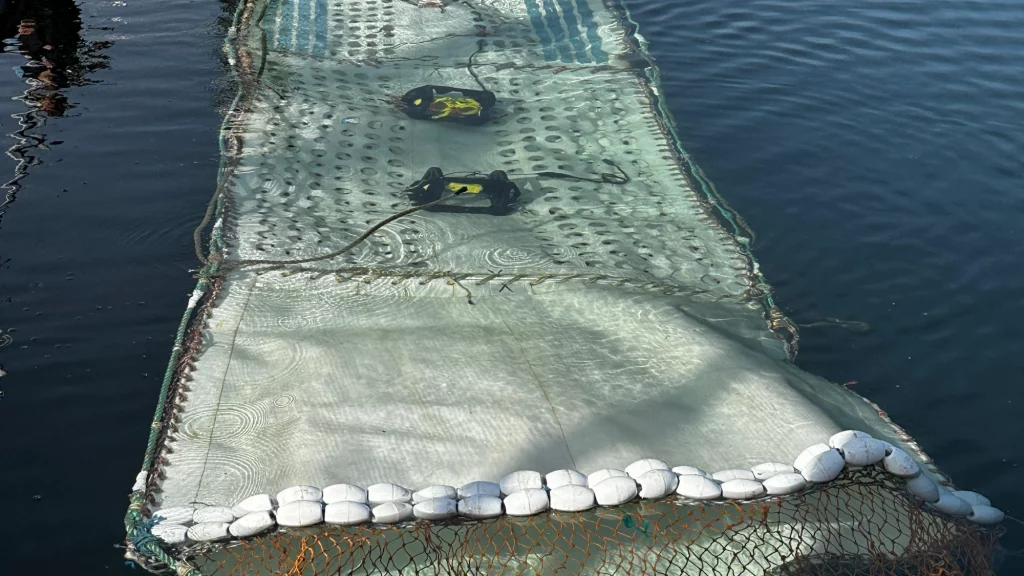
Durability at sea was also tested. Over nine months of development, the system was proven on two very different commercial vessels: the Eilidh Anne, trawling a Nephrops mixed fishery in Scotland, and Okarito, a 40-foot inshore trawler in Tasman Bay, New Zealand, working alongside Plant & Food Research Group, with the Bioeconomy Science Institute.
During four days of commercial trials, the team completed around fifteen release events without technical issues, demonstrating that the system could operate reliably under normal fishing conditions.
Two different vessels, two different fisheries, and the same working demands of salt water, pressure, and a crew with a tow to finish.
Could underwater monitoring transform commercial fishing?
These commercial trials demonstrated that underwater catch monitoring and ‘Release at Depth’ are technically achievable under commercial fishing conditions. More importantly, they showed how shifting information earlier in the fishing process could give skippers more opportunities to make informed decisions before a haul reaches the surface.
The technology does not make decisions for fishermen. Instead, it provides additional information, helping crews respond to changing conditions while they still have options.
Further commercial development is still required before the system becomes widely available. As underwater imaging, acoustic communication and artificial intelligence continue to advance, systems like ‘Release at Depth’ could play an increasingly important role in selective fishing, catch welfare and more evidence-based fisheries management.
Interested in underwater catch monitoring?
Whether you’re exploring selective fishing, catch welfare or precision fishing technologies, we’d be happy to discuss how CatchCam could support your next project.
FAQs
Release at Depth is a remotely activated codend release system that allows crews to release unwanted catch underwater after reviewing images transmitted from the codend during a tow.
Underwater catch monitoring uses cameras and sensors inside fishing gear to provide visibility of the catch before the net is hauled.
Radio signals do not travel effectively through seawater, so acoustic communication is used to transmit images and commands between underwater equipment and the vessel.
Cabled systems are also not ideal in commercial fisheries, where they can interfere with fishing operations.
The system is designed to provide earlier information about the catch, allowing skippers to decide whether releasing the codend is appropriate before hauling. The technology supports more informed decision-making but does not replace the judgement of the crew.
Transmitting large amounts of data underwater is challenging because radio signals do not travel effectively through seawater, and acoustic communication has limited bandwidth. Instead of streaming continuous video, the system converts periodic still images into acoustic signals, allowing the skipper to receive regular updates from inside the codend using existing underwater communication technology.