A Flexible System for Underwater Monitoring
When people first hear about CatchCam, they tend to picture an underwater camera.
And they’re right.
That’s where we started.
Since then, we’ve spent a lot more time at sea – in Scotland, New Zealand, the Western Channel and beyond – working alongside fishermen, scientists and environmental monitoring teams. The challenges they brought to us were rarely about simply capturing footage.
How do you monitor a remote site for months on end?
How do you see what’s happening inside a trawl net while the gear is still fishing?
How do you combine video, environmental data and vessel information in a way that actually makes sense?
Those conversations pushed us.
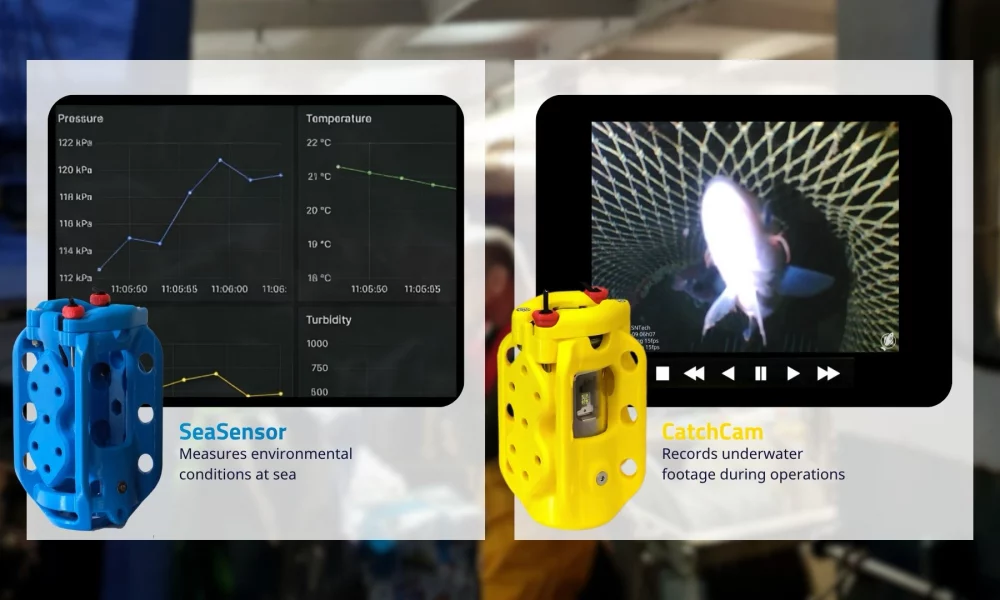
Today, CatchCam is no longer just an underwater camera. It has evolved into a flexible underwater monitoring system that combines cameras, environmental sensors, communications and software into one adaptable solution.
How do you monitor a remote site for weeks at a time?
Some of the most important underwater environments are also the hardest to reach.
Marine protected areas, offshore renewable sites, restoration projects and remote habitats often require long-term monitoring, but regular site visits are expensive, weather dependent and sometimes impractical.
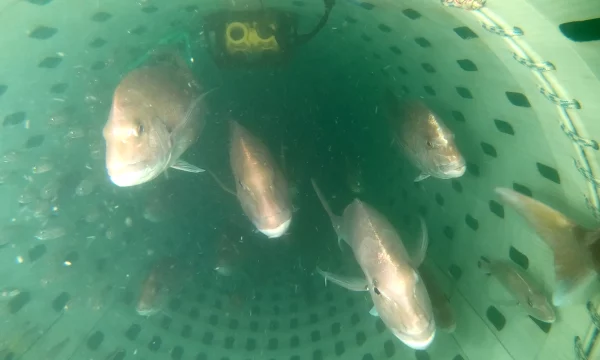
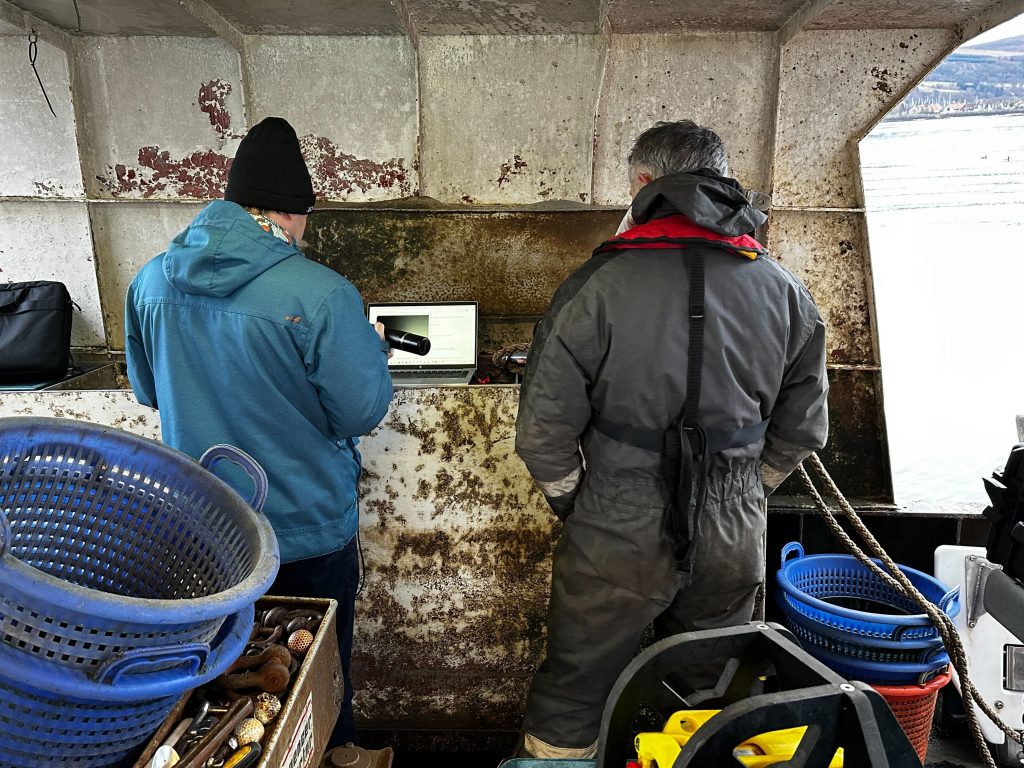
To solve this, the CatchCam underwater monitoring system can be configured as an autonomous monitoring station for long-term deployments.
It combines the CC-Bio camera system with an extended battery pack, a SeaSensor environmental unit, a SmartLamp for low-light conditions and our developing 1080p camera capability.
Together, these technologies collect scheduled underwater imagery alongside environmental data – such as temperature, depth, motion, and more – for weeks at a time.
One recent deployment in Scotland demonstrated exactly what’s possible, achieving 36 days of continuous scheduled monitoring in a single charge. Now, the same system is evolving further, integrating camera and SeaSensor data with a surface buoy to expand remote access without changing the core monitoring approach.
System Configuration
- CC-Bio
- Extended Battery Pack
- SeaSensor
- SmartLamp
- Scheduled Recording
- Surface Buoy (coming soon)
When live underwater monitoring is needed
While many marine monitoring projects benefit from autonomous deployments, there are situations where live underwater monitoring can change how decisions are made.
Cable deployment systems, wireless acoustic transmission and live video capabilities, can all enable faster troubleshooting and immediate operational decisions. Each, adapted to its use case.
One exciting example is our collaboration with FloMo in New Zealand.
By installing a CatchCam camera inside the codend and transmitting images back to the vessel, the crew can monitor what is happening underwater and remotely control the codend opening. If unwanted catch is identified, it can be released before hauling.
The system is currently undergoing commercial trials, but it demonstrates something much bigger. Underwater cameras are evolving from recording devices into operational decision-support tools.
We fitted a CatchCam camera inside a FloMo to transmit live images wirelessly from the codend back to deck, and finally, give the crew control to open the codend remotely.
System Configuration
- CatchCam Camera
- Wireless Acoustic Transmission
- Live Video
- Integration with FloMo system
How do you bring all your underwater information together?
"To visualise and see the gear performing in nearly real time was eye opening… I wish we had CatchCam years ago, we would have gotten there so much quicker."
David Stevens, Skipper of Crystal Sea
Video tells you what happened.
Environmental data helps explain why.
Meanwhile, vessel information provides the operational context.
Independently, however, they only tell part of the story.
So, we increasingly combine these data streams into a single underwater monitoring workflow.
The SeaSensor system records environmental conditions such as temperature, depth and movement, which can be paired with the CatchCam camera to add visual evidence.
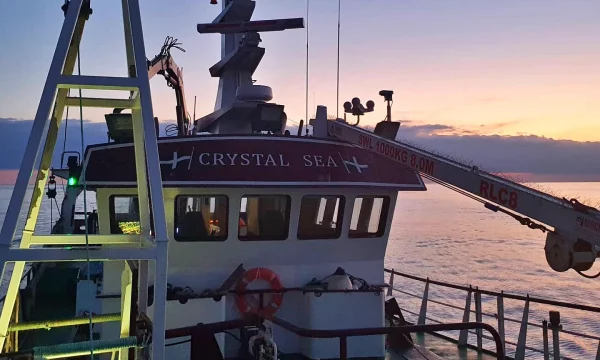
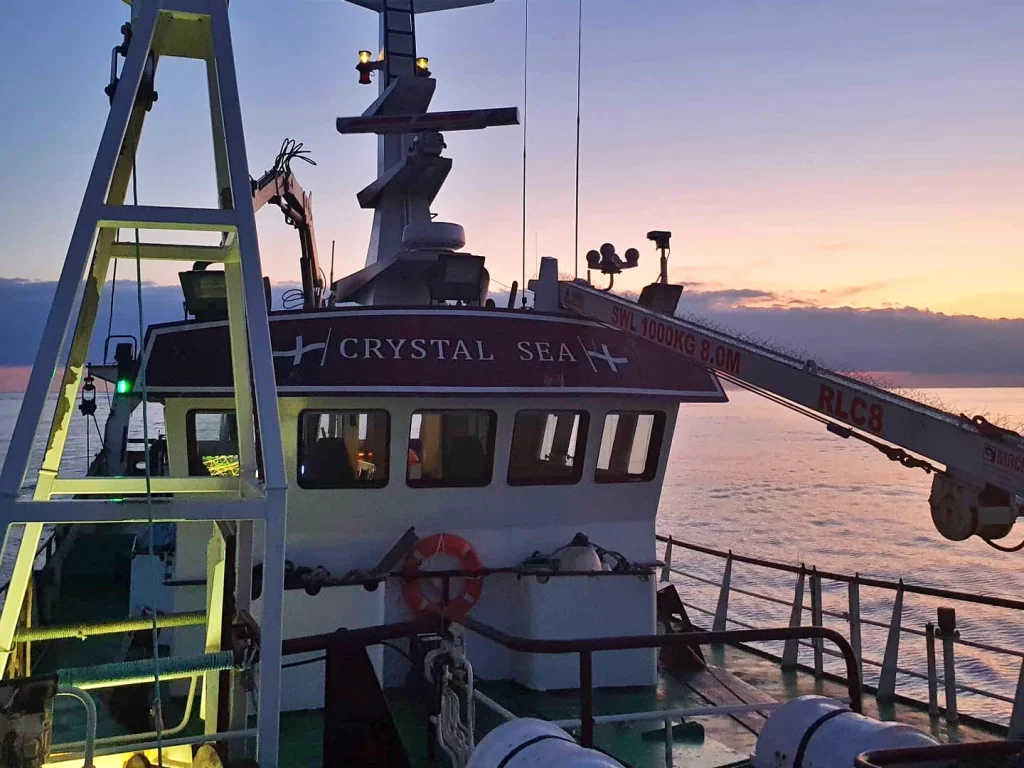
For fishing vessels, the SailorMate (also known as FishersMate) integration goes further, merging underwater video with vessel operational data so the full picture of a fishing event is captured in one place. The twin-rig trawler Crystal Sea in the Western Channel is the first vessel to commercially trial this system.
System Configuration
- CatchCam Camera
- SeaSensor
- SailorMate Integration
- Multi-position Trawl Attachment
There isn't just one CatchCam system
"These are powerful tools for fishermen to step up and use to contribute to science"
Tom Rossiter, Co-Founder of CatchCam Technologies
Every monitoring challenge is different.
Many projects need autonomous deployments that can remain underwater for weeks.
Others require live operational visibility.
Some simply need better environmental context or easier access to underwater information.
That’s why every CatchCam deployment starts with the same question:
What are you trying to understand?
From there, we configure the system around the challenge.
Whether that’s adding environmental sensing, increasing deployment time, introducing live communications or integrating operational data. Every component is designed to work together as part of one adaptable monitoring system.
Capture
CatchCam Camera
SeaSensor
SmartLamp
Connect
Wireless
Tethered cable system
Acoustic Transmission
Fiber optic cable
Surface buoy communications
Solar Hub Platform
Understand
Windows App
Integrated video and environmental data
Integrated vessel data
AI-ready tool
Act
Better scientific evidence
Better fishing decisions
Better environmental management
Building what's next
Every project teaches us something new.
As a result, the CatchCam platform continues to expand beyond the camera itself.
The technologies currently under development include:
- SmartLamp for improved low-light performance
- 1080p for higher-resolution imagery
- a new Windows application to simplify workflows
- AI-ready SeaFrame technology that will support automated analysis in the future
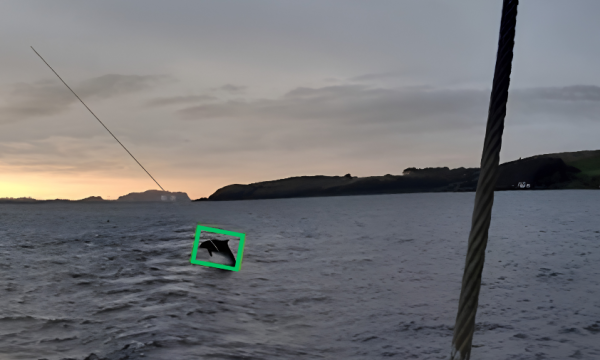
Our development isn’t limited to underwater systems. Through collaborations with partners such as Yatina and SNAP, we’re also exploring above-water camera systems that can automatically record seabirds and marine mammals during normal fishing operations.
Together, these developments make underwater monitoring easier, faster and more accessible.
Let's build the right system for your challenge
If there’s one thing we’ve learned over the last few years, it’s that no two monitoring challenges are the same.
That’s why CatchCam has evolved from a single underwater camera into a complete underwater monitoring system.
So, whether you’re improving fishing operations, monitoring marine biodiversity or collecting environmental data offshore, every project starts with the same question:
What do you need to understand?
From there, we’ll help build the right CatchCam system around it.
Not sure which configuration fits your project? That’s the kind of conversation we’re here for.