From Bare Seabed to Thriving Habitat
The seabed looked almost empty when we deployed the system.
No rocks. No visible structure. Constant movement from waves and sediment.
But over the next 36 days, things started shifting.
“Seaweed began collecting around the frame. Small fish appeared. Then shrimp, hermit crabs, velvet crabs, and larger brown crabs moved in. You could see an ecosystem slowly building itself up,” recalls Tom Rossiter, CoFounder of CatchCam Technologies.
The deployment at Cairnie’s Quay in Largs, Scotland, started as a test of long-term underwater monitoring. We wanted to understand how far a battery-powered camera system could be pushed using scheduled recording rather than continuous video.
What began as a technical trial soon became something more interesting. In an environment with very little natural structure, the camera deployment itself gradually became a habitat, attracting an increasing variety of marine life and providing a unique window into ecological change over time.
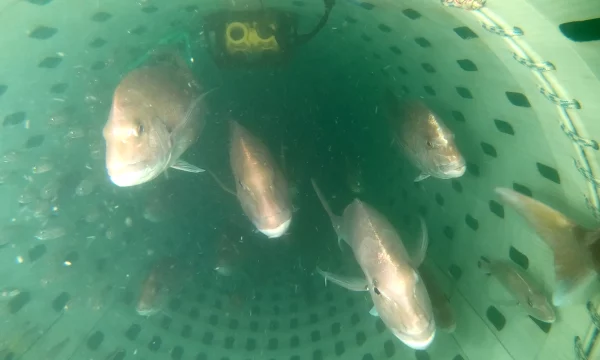
Underwater footage from the CatchCam camera system: velvet crabs fighting over territory. Marine biodiversity monitoring in Cairnie’s Quay, Scotland.
Monitoring Marine Biodiversity Underwater
For marine researchers and biodiversity monitoring teams, long-term deployments often involve trade-offs.
Battery life, storage capacity, difficult weather windows, retrieval logistics and environmental conditions all shape what is realistically possible offshore.
At Cairnie’s Quay, visibility changed constantly due to suspended sediment and water movement. Seaweed interfered with equipment, and the seabed itself offered very little structure.
In other words, it reflected the kind of imperfect conditions many marine monitoring teams actually work in.
The deployments were carried out in partnership with Cairnie’s Quay Mooring Association, a volunteer-run group based on Scotland’s west coast in Largs.
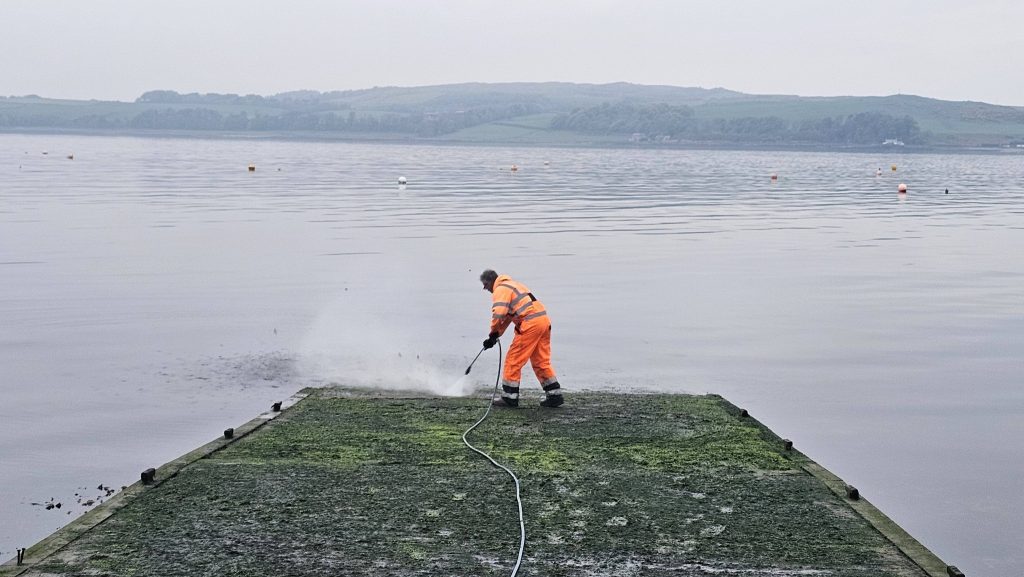
Cairnie’s Quay Mooring in Largs, Scotland, where camera deployments were carried out. Photo by Cairnies Quay Mooring Association.
How Scheduled Recording Can Extend Long-Term Marine Monitoring
One of the most useful lessons from the deployment was how effective scheduled recording proved to be.
Rather than filming continuously, the CatchCam system recorded:
- 5-minute clips
- 3 times per day
- Primarily during daylight hours
This approach reduced unnecessary recording during darkness while still capturing meaningful ecological observations.
The result was a 36-day deployment on a single battery charge.
That said, monitoring objectives vary between projects. And for some, continuous recording is a need.
However, for projects where conditions change relatively slowly, continuous recording may simply generate thousands of hours of footage with little additional ecological value.
In this case, scheduled sampling can provide high-resolution observations while dramatically reducing power consumption, storage requirements, and even maintenance costs.
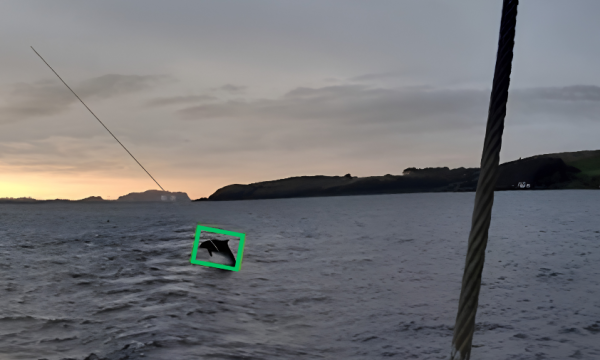
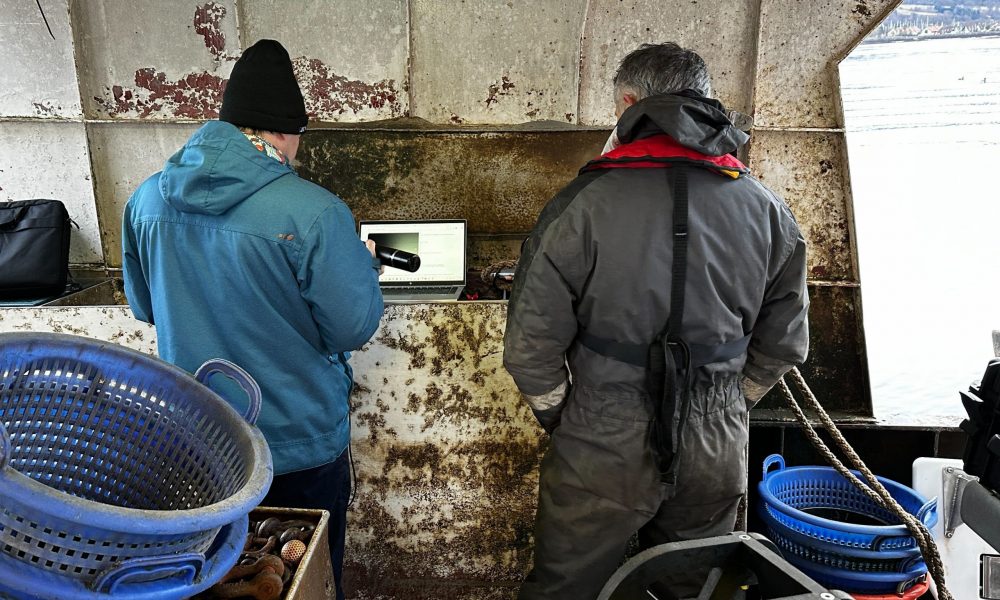
Biodiversity monitoring with the CatchCam underwater camera system in the Firth of Clyde, near the site for the Cairnies Quay deployment.
What We Learned From 36 Days Underwater
One of the most interesting findings wasn’t related to battery life or storage capacity.
It was how quickly the environment changed.
Initially, the site appeared relatively barren. Strong water movement, suspended sediment and a lack of structure created a constantly shifting environment with limited shelter for marine life.
Over time, seaweed began collecting around the camera frame and anchoring system. Small fish started appearing around the structure, followed by shrimp, hermit crabs, velvet crabs and larger brown crabs.
The deployment highlighted two important lessons.
First, long-term observations can reveal environmental changes that would be easy to miss during short site visits.
Second, marine monitoring is rarely predictable. The same seaweed that helped create shelter for marine life also created challenges for the monitoring equipment itself, reinforcing the importance of adaptable system design.
Designed for Flexible Marine Monitoring
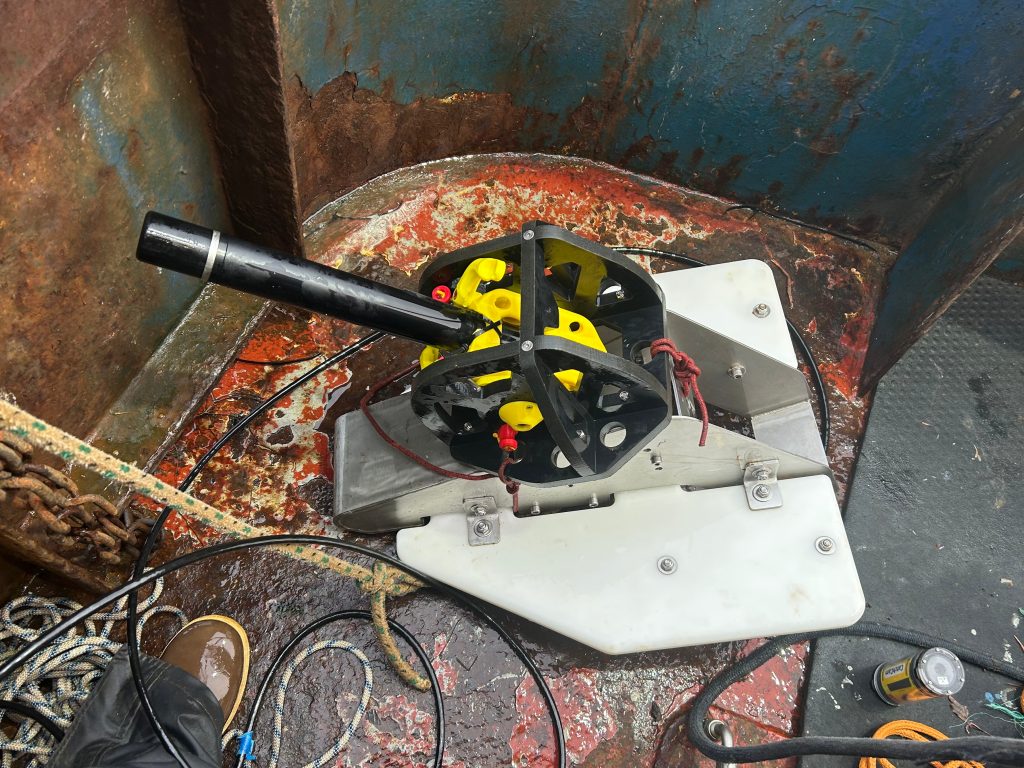
The Cairnie’s Quay deployment also demonstrated the value of configurable monitoring systems.
Depending on project requirements, CatchCam systems can be configured for:
- Scheduled recording during daylight hours or at night using artificial illumination
- Standalone battery deployments
- Extended low-power monitoring
- Daisy-chained battery systems
- Integration with environmental sensors
This flexibility allows researchers to tailor deployments around the species, habitat and environmental conditions they are studying, whether the objective is short-term behavioural observation or long-term ecosystem monitoring.
The Cairnie’s Quay deployment is just one example of how configurable underwater camera systems can support biodiversity surveys, habitat monitoring and environmental research.