What’s Really Happening Inside Your Trawl Net?
“To visualise and see the gear performing in nearly real time was eye opening… I wish we had CatchCam years ago, we would have gotten there so much quicker.”
David Stevens, Skipper of Crystal Sea
For decades, commercial fishing has relied on experience, intuition and indirect data.
You set the gear. You tow. You analyse the catch.
But what if that’s only half the story?
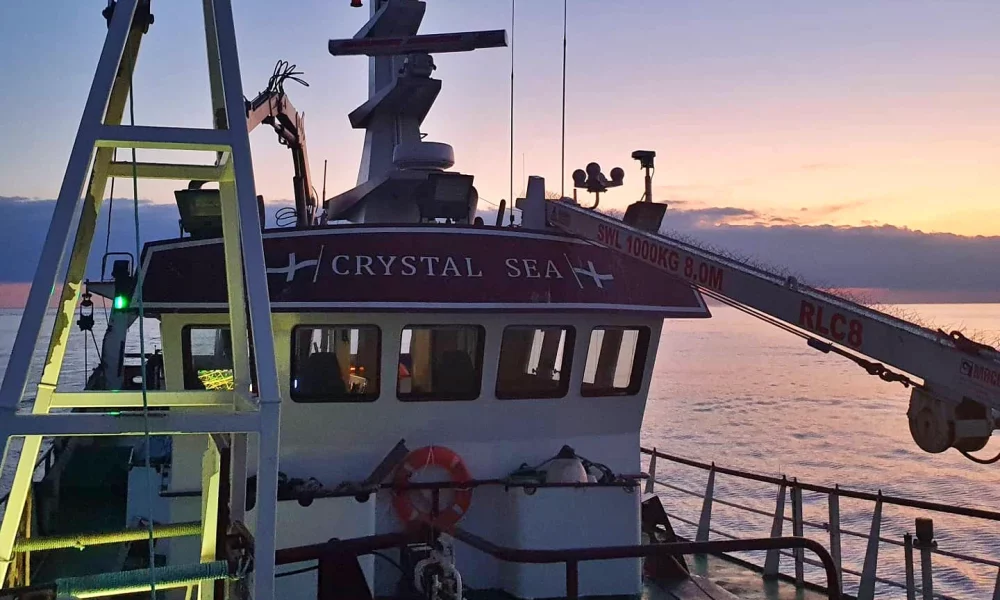
In the Western Channel, aboard the 24.5m twin-rig trawler Crystal Sea, skipper David Stevens and his crew set out to see what really happens between shooting the gear and hauling it back.
Working with the Cornish Fish Producers Organisation and CatchCam Technologies, they deployed underwater cameras and environmental sensors across the net, from headline to codend, tracking exactly how fish move through it.
As it turns out, the footage demonstrates that roughly 3 out of 4 fish interacting with the gear never make it to the codend.
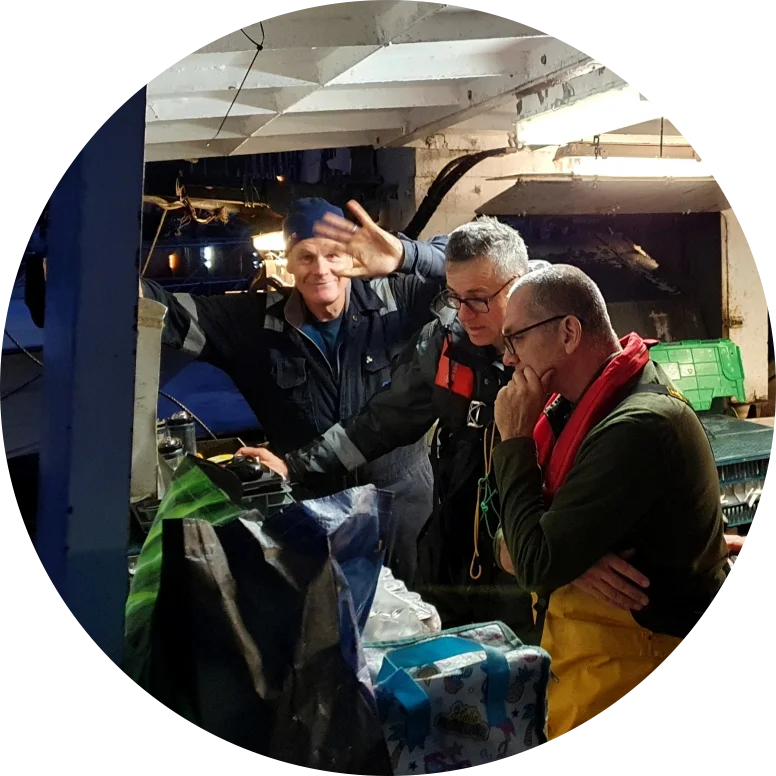
Commercial fisherman and skipper of the Crystal Sea, David Stevens, chats with Tom Rossiter, CoFounder of CatchCam Technologies, about his experience deploying the CatchCam camera systems in the Western Channel.
Inside the Crystal Sea Deployment
David Stevens and his crew are not new to gear development.
Over 30 years, they’ve refined their trawl setup using catch comparisons, control nets, and experience to improve selectivity and performance.
But until now, most decisions were based on what came aboard, not what happened underwater.
“All of these years we have only been able to understand how our gear was performing by using sampling techniques comparing a control net with a modified net and our own intuition (...) However, to visualise and see the gear performing in nearly real time was eye opening.”
David Stevens, Skipper of Crystal Sea
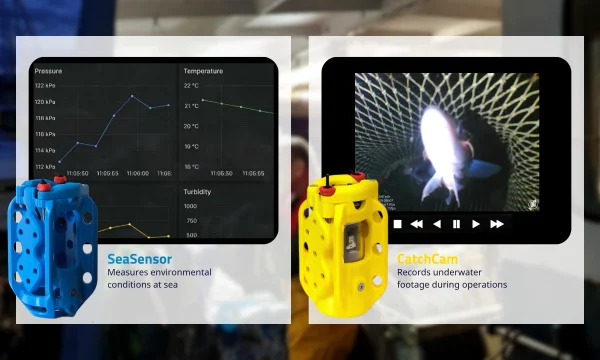
During the week, CatchCam cameras were deployed at multiple points on the gear, while a SeaSensor unit recorded environmental conditions.
The goal was simple: observe gear performance without disrupting how the vessel normally fishes.
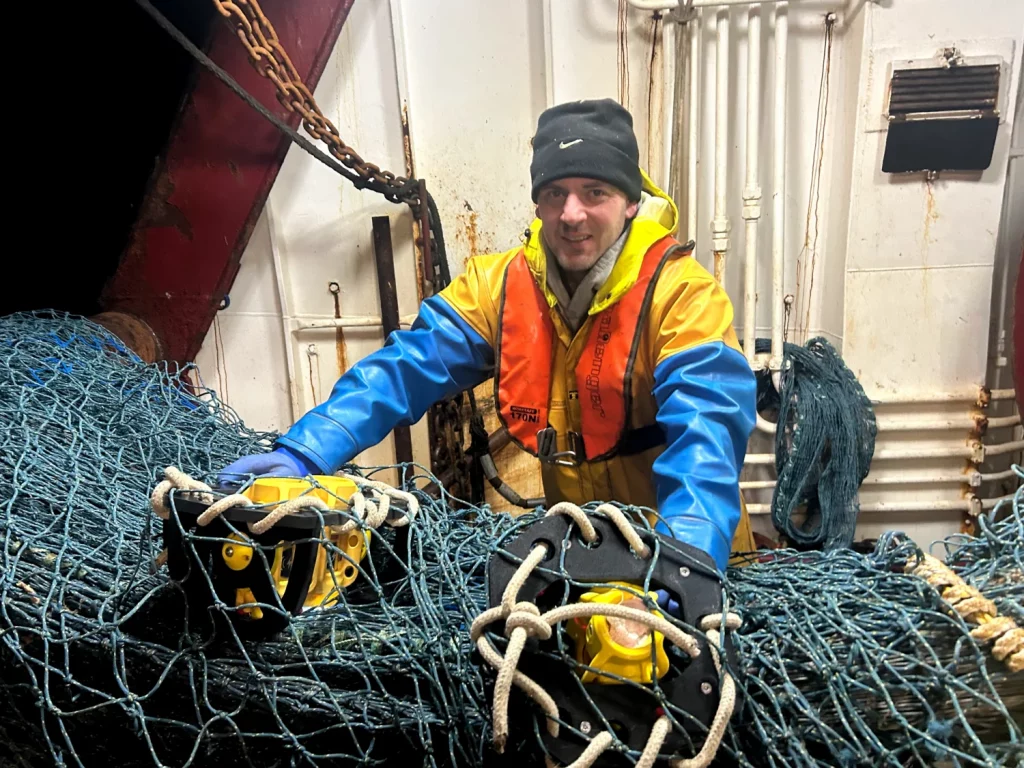
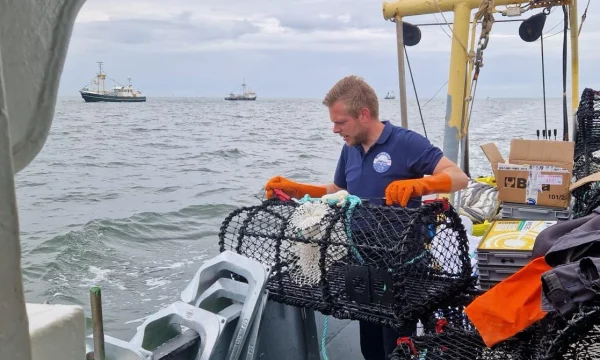
The crew Roberts Vimba preparing CatchCam cameras for deployment: aiming to record the trawl net without slowing the tow.
What Actually Happens Inside a Trawl Net
Footage from the week revealed several consistent patterns:
Two cameras were deployed on rotation. Recorded at 15fps in 10-minute clips, balancing image quality and battery life while simplifying review.
- Fish enter low and stay low. Most fish entered the net close to the seabed. Pelagic species like mackerel, herring, and scad were exceptions, and seemed attracted to the camera lights.
- Movement becomes passive. Fish rely less on active swimming and more on water flow, especially near the codend.
- The net guides everything. The trawl’s shape and geometry funnels fish toward key areas, particularly the Square Mesh Panel (SMP), the main selective section of the net.
- Escape is constant. One of the most important observations from the trial was that escape happens throughout the gear. This means selectivity is a continuous process, not just something that happens at the codend.
- The Square Mesh Panel works. Large volumes of small fish escaped along the panel length, while very few marketable fish were lost. This validates decades of practical experience.
- Small gear tweaks make a difference. Tickler chains created sediment plumes, affecting visibility and fish movement. Adjustments to chain setup and gear spread had immediate effects.
These observations highlight how traditional landings data underrepresents actual fish interactions, and show the value of in-situ monitoring technologies for better understanding.
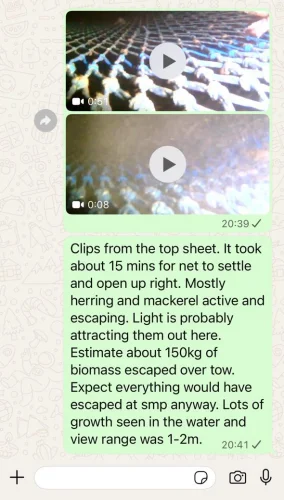
After each tow, Tom Rossiter retrieves CatchCam footage and shares key clips with skipper David Stevens for immediate action.
How to deploy Camera and Sensor Systems
For these trials, one SeaSensor system was mounted directly onto the gear, to collect environmental data.
And two CatchCam camera systems were rotated across multiple gear positions between tows.
Camera key points included:
- Headline (internal and external)
- Flip-up gear (forward and backward views)
- Bottom sheet
- Square mesh panel (top and bottom)
- Codend (internal and external)
- Ground gear and wing
Using two cameras allowed continuous data collection. While one camera was deployed, the other was downloading footage, and being reviewed. Short clips and observations were shared with the skipper between tows, allowing immediate discussion and adjustments.
“We’ve been out collecting data, seeing things many fishermen have never seen before, trying to understand what’s going on out here at sea(…) These are powerful tools for fishermen to step up and use to contribute to science.”
Tom Rossiter, CoFounder of CatchCam Technologies
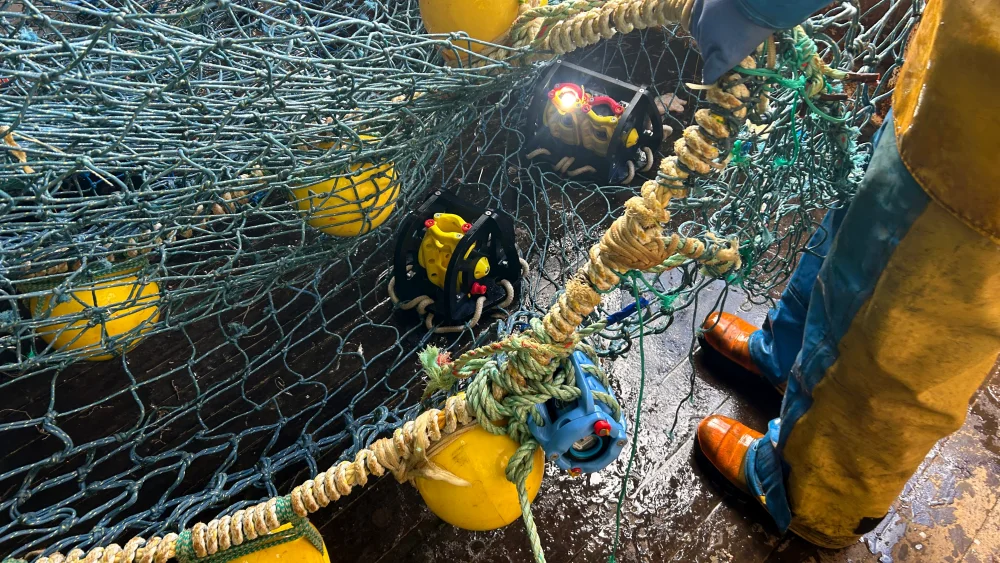
CatchCam and SeaSensor units attached to the gear, collecting behavioural and environmental data in a commercial fishing vessel.
Fishermen are Driving Fisheries Science
This project was supported by the Cornish Fish Producers Organisation as part of a wider initiative to increase industry involvement in fisheries science and data collection.
Instead of relying solely on research vessels and short scientific trials, data is now being collected directly from commercial vessels during normal fishing operations.
So, across real fishing conditions.
“We really are at a point where industry can shape its own future by creating a data-led rules-based management system that will only benefit the fishery and outcomes for all those involved.”
David Stevens, Skipper of Crystal Sea
This represents a shift: fishermen are no longer just providing landings data.
They are now able to provide behavioural data, gear performance data, and environmental data directly from the fishing grounds.
More Happens Than the Catch Shows
One of the most striking takeaways from the week: the catch on deck is only a portion of the fish interacting with the gear during a tow.
Footage shows fish entering the net, moving through different sections, and escaping at both the SMP and codend, especially in rough conditions.
For fishermen, this means gear development no longer has to rely only on catch comparisons over many trips. Changes to gear can be observed almost immediately underwater.
For scientists, it provides real-world behavioural data across different grounds, seasons, and vessels.
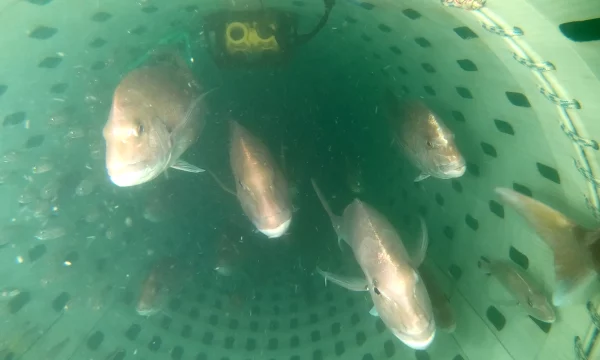
Continuous escape observed at codend during rough conditions, highlighting why landings data alone can be misleading.
Looking Forward: Data-Driven Fishing
As David Stevens put it:
“This week felt like welcome to the data gathering space age… The opportunities that modern technology has to offer for data delivery into fisheries science by industry is huge.”
David Stevens, Skipper of Crystal Sea
CatchCam and SeaSensor are enabling fishermen, scientists, and the wider industry to work together, collect underwater data from commercial fishing operations, and better understand what’s happening in the net.
Going forward, more trials are likely to take place on local beamers, helping feed data into maps showing what’s on the seabed in the area.
Whether you’re a commercial fisherman, gear designer or fisheries scientist, we can help you gain new insights from your gear.