Skip to content
What Underwater Video Reveals About Finland Perch Fisheries
“Here in Finland, autumn has pushed forward and the days are growing shorter. Soon we’ll enter our annual four-month hibernation,” shares Petri Suuronen as he wraps up his research for the year.
Together with his colleague Timo Vetriö at the International Seafood Consulting Group (ISCG), Petri has been exploring a familiar question for Finnish fishers: can the perch fishing season be extended beyond spring using traps?
One finding stood out immediately: If traps stay in one place for more than three days, catch rates drop significantly, even with bait.
That single observation already tells an important story. It points to fish behaviour, not just season or stock size, as a key factor limiting trap efficiency.
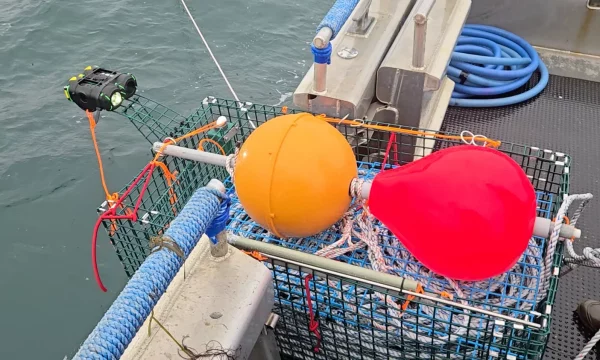
To understand why this happens, the team added underwater cameras, using CatchCam systems to observe how perch actually interact with the traps.
Underwater footage from the CatchCam camera system: A shoal of European perch approaches a wire-trap, but only a small fraction of them swims inside.
Can Trap Fishing Go Beyond Spring?
“Trap fishing has huge potential,” Petri explains. “But right now, it’s highly seasonal and often inefficient. We’re trying to change that.”
Petri Suuronen, Fisheries Scientist at ISCG
In Finland, European perch trap fishing is largely concentrated in spring during the spawning season. Outside that period, catches are often too small or inconsistent to make trap fishing economically viable. As a result, most autumn fishing relies on gillnets instead.
That’s a missed opportunity, because wire-traps offer some clear advantages:
- Fish stay alive in the gear (better quality, less handling)
- Fishers don’t need to visit gear every day
- Bycatch can often be released alive
The challenge is not whether traps work, but why they stop working and what can be done about it.
Without visibility underwater, it’s difficult to know whether poor catches are caused by low stock, poor gear design, incorrect soak time or changing fish behaviour.
To answer that, first we need to see what’s happening underwater.
How the Trials Worked
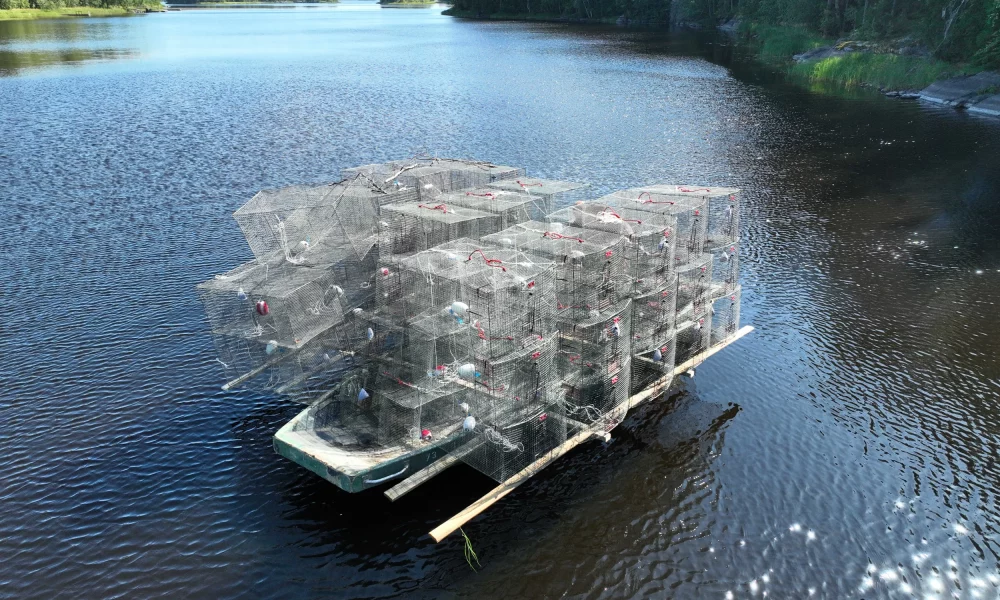
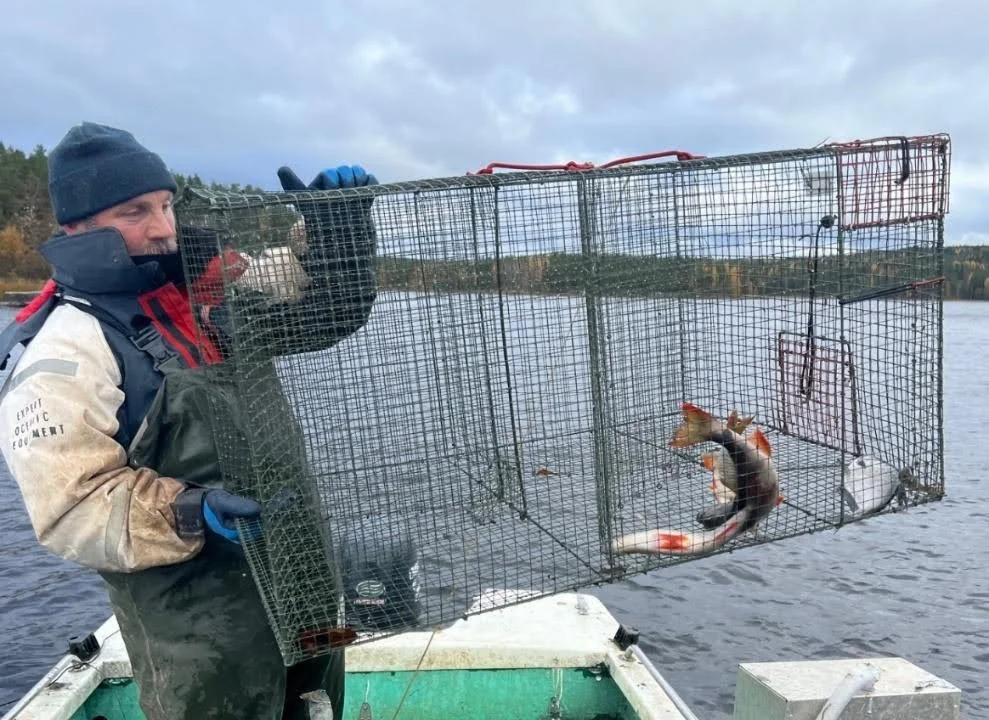
Between June and October 2025, Petri Suuronen and local fisherman Pirkka Nahkala carried out controlled fishing trials in Lake Tarjanne, Finland.
The trials included:
- 160 traps deployed in total
- 4 trap models tested
- ~300 hours of underwater video recorded with CatchCam underwater cameras
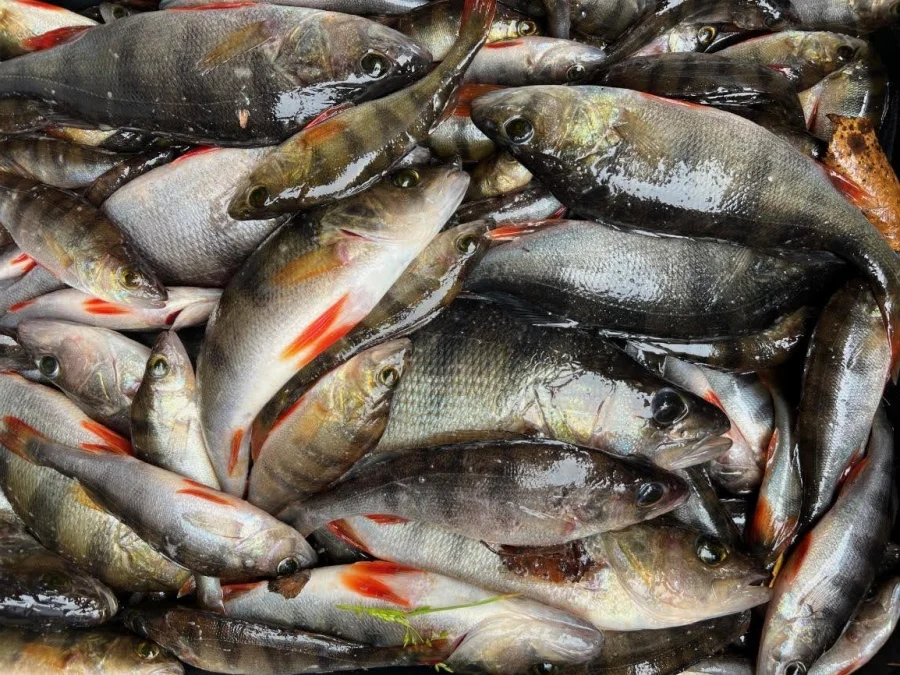
- Approximately 6,000 perch caught, plus significant bycatch including pike, bream, roach, pike-perch and freshwater crayfish
The goal wasn’t just to measure catch, but to understand fish behaviour around traps.
Underwater footage was collected continuously, allowing researchers to observe how fish interacted with traps and different stimuli over time, and how that behaviour changed as soak time increased.
What Video Showed Us: Perch Don’t Just Swim Into a Trap
A common assumption in trap fishing is that fish in the area will eventually swim into a trap. But the CatchCam camera footage told a different story.
- Fish presence ≠ fish entry
Video repeatedly showed perch shoals swimming near traps without entering. - Soak time drives behavioural avoidance
Catch declined systematically after 2–3 days, even when bait was used. - Funnel placement matters more than assumed
Fish often hesitated at the entrance, turned back, or explored trap walls instead of entering. - Pike fundamentally change trap dynamics
When a pike entered a trap, it often ate the perch inside. This stopped perch from entering altogether. This effect is invisible from catch data alone.
Improving the efficiency of perch trap fishing and extending the fishing season. Suuronen & Vetriö, ISCG, December 2025
These behavioural insights help explain why catch rates fall even when fish remain nearby, and why moving traps is critical. That’s exactly what underwater video systems like CatchCam were designed for.
Camera Systems for Underwater Monitoring
This project is a good example of what CatchCam systems are designed to do: make the invisible visible. By showing how fish actually interact with gear, underwater cameras help:
- separate stock availability from behavioural response
- Test gear designs
- identify where and why efficiency is lost
This transforms trial-and-error fishing into evidence-led decision-making, giving fishers insights they can act on immediately.
During the 2025 trials, the cameras captured ~300 hours of footage, showing perch interacting with traps, hesitating at funnels, and responding to predators. This allowed researchers to see patterns invisible from catch data alone.
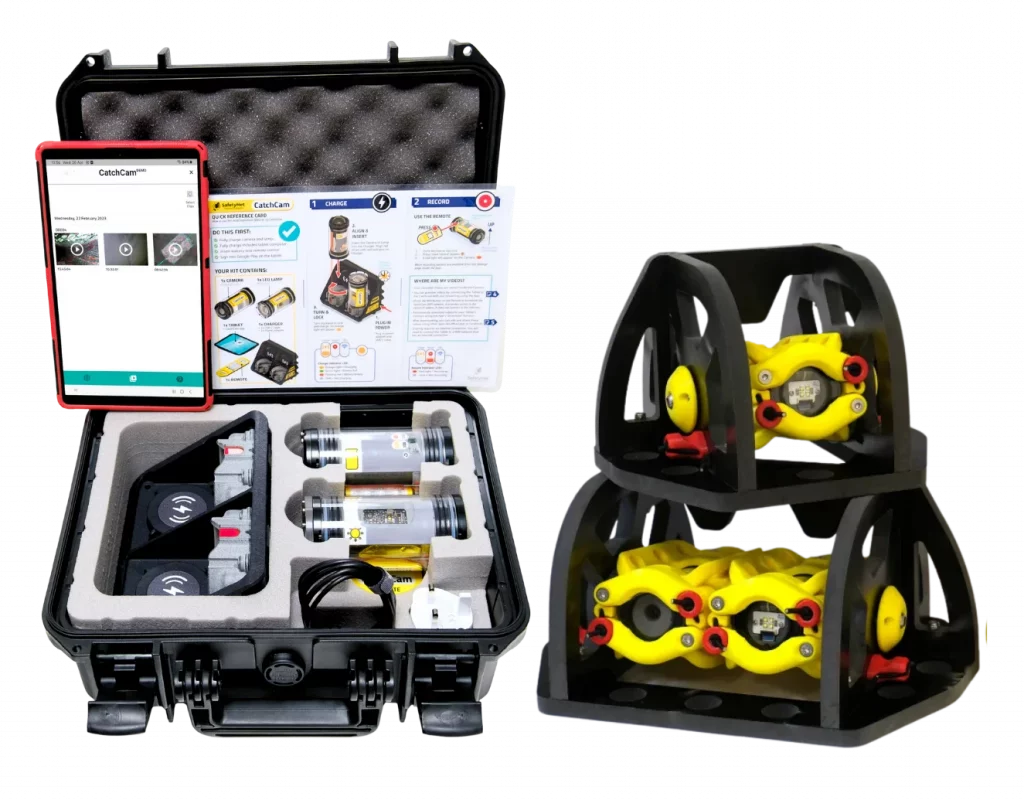
How CatchCam Helps
- 4-week battery life for long deployments
- Scheduling mode for timelapse or continuous observation
- Easy deploy & recover, even in remote locations
From Understanding to Action: Why Data Matters at Sea
“Fishing smarter, not harder can sound like a slogan”, says Tom Rossiter, founder of CatchCam Technologies. “But for me, it comes from watching fish behave in ways we don’t expect.”
Good fishing today isn’t just about more power, more gear, or more days at sea. It’s about understanding how fish behave, and how the gear behaves with them.
That understanding starts underwater.
“This year, we learned many important behavioral characteristics of perch during capture. With this information, the design of the gear and its set-up can be significantly improved”.
Petri Suuronen, Fisheries Scientist at ISCG
Smarter fishing means reducing waste, supporting sustainable practices, and helping feed the 3 billion people worldwide who rely on fish for food.
Underwater video adds another layer: it provides data that benefits fishers directly, but it also supports science and fisheries management, something increasingly important as traditional data collection struggles to keep up.
Working closely with Petri Suuronen, Timo Vetriö, and local fishers in Finland, we’ve already learned a great deal. And in 2026, we’ll be back to take it further, guided by what the fishers themselves want to test next.
The European Maritime, Fisheries and Aquaculture Fund (EMFAF) is a supporter of this project.
Whether you’re a commercial fisher, gear designer or fisheries scientist, we can help you gain new insights from your gear.