Most crews often operate without ever seeing how their gear behaves underwater.
For vessels operating in Newfoundland’s productive shrimp fishery, even small issues with grid angle, flow, or panel tension can reduce catch quality or increase bycatch.
To fix that, the crew of the 67-metre Newfoundland Lynx added a CatchCam trawl camera system to their recent fishing operations with Hampidjan Canada.
See It to Fix It
The footage below shows a typical tow: the net towing fast, slowing down, and the catch floating and settling. When towing resumes and the vessel picks up speed, you can clearly see shrimp flowing through the sorting grid.
Underwater footage of a demersal shrimp trawl in Newfoundland, showing shrimp sorting grid selectivity and catch flow using the CatchCam underwater trawl camera system.
From the video, the crew was able to spot issues with the grid. They could see:
- How the shrimp sorting grid performed under different towing conditions
- Whether the grid angle was right
- If anything was blocking the grid, including bycatch.
- Confirm that the grid remained clear when the net was hauled
Without video, these problems are almost impossible to detect from the deck. So the camera not only helped the crew tweak the setup, but it also gave them peace of mind that everything was working as it should.
"Having the camera onboard changes how the crew sets up the gear. We could see exactly what was happening and fix it before the next tow”
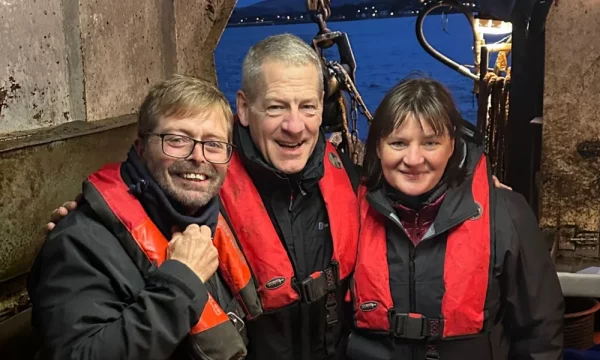
Darryl Kelly, skipper of 67-metre Newfoundland Lynx
How to Mount a Trawl Camera
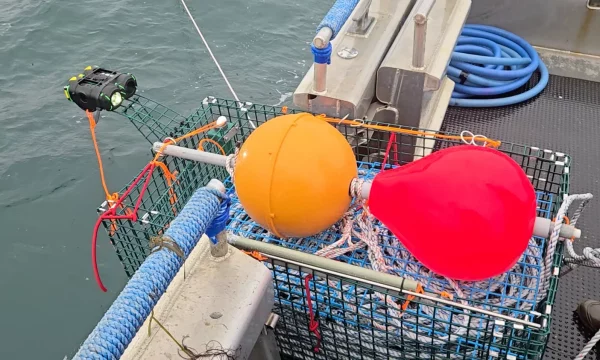
The crew mounted the CatchCam system directly ahead of the grid on the Newfoundland Lynx’s demersal trawl.
The trawl attachment makes it easy to secure the camera to the net. Plus, CatchCam’s mounting system allows crews to move the camera between different rigs and gear types when needed.

The different types of mounts let crews use the same CatchCam camera across different types of fishing gear. The double attachment allows for integrated lighting for deeper tows.
Catch and Trawl Monitoring System
Selectivity devices only work when tuned correctly. Small tweaks in grids, inclined panels, and flow-dependent gear can affect escape rates and catch quality. CatchCam lets crews check them.
While this deployment focused on demersal shrimp trawling, it also highlighted the growing interest in underwater video across Canada’s expanding pelagic sector. The same CatchCam Deep system can be used for both demersal and pelagic applications.
This trip was part of continued collaboration with Hampidjan Canada, who supply both gear and CatchCam systems to skippers looking to improve selectivity and catch performance.
See how CatchCam can be easily integrated into your operations.
Underwater footage recorded by the CatchCam trawl camera system. It shows a demersal trawl descending as it get ready to tow.